

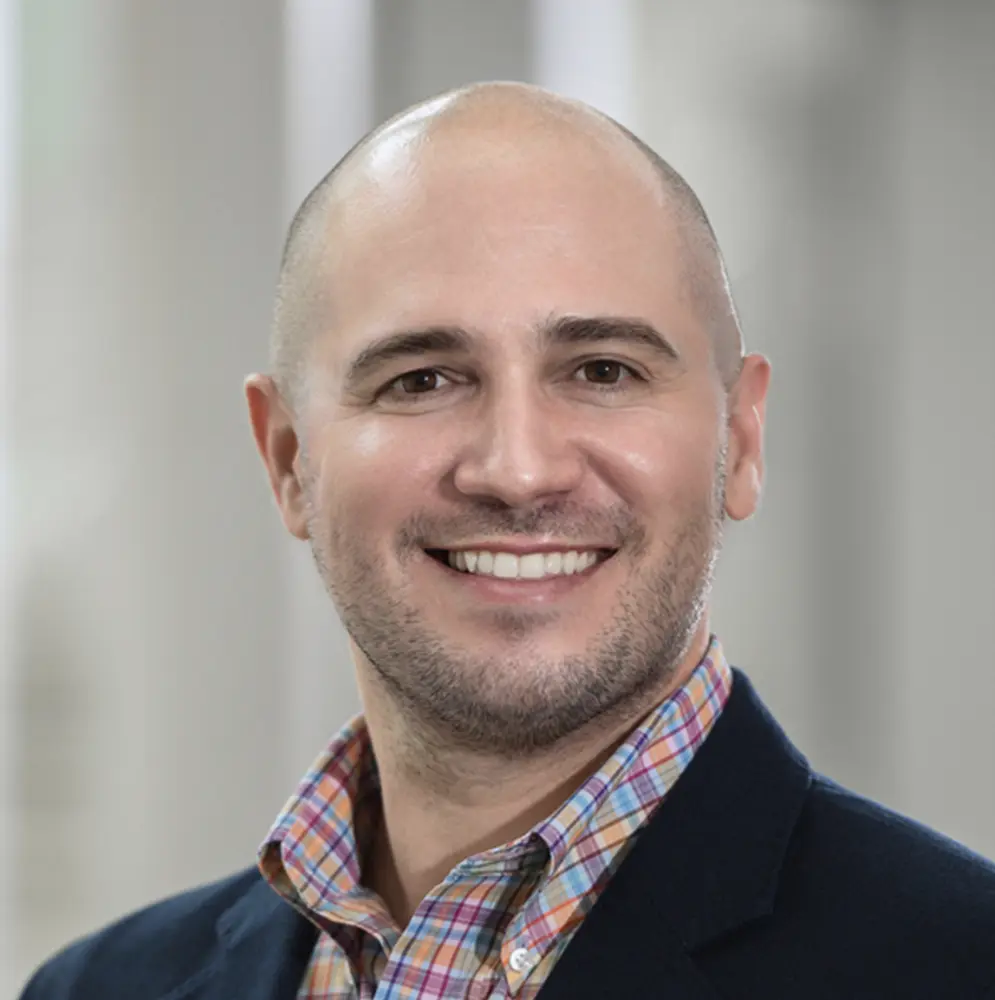
Dr. Gabriel Lázaro Muñoz is Assistant Professor of Psychiatry at Harvard University and a member of the Center for Bioethics at Harvard Medical School. Together with Peter Zuk, he presented his research at a conference organized by Neuroética Buenos Aires. We asked him about the development of neuroethics and the interest it generates.
Does neuroethics attract the attention of professionals in medicine, psychology, neuroscience, law, and philosophy?
I think so. Neuroethics is a relatively new field, born in response to advances in neuroscience during the 1990s and early 2000s. It combines methods and approaches from established fields such as philosophy, law, and the social sciences to examine the implications of new knowledge about the brain, tools for studying and modulating brain activity, and a growing understanding of how human behavior and diverse disorders originate in the brain.
Because the brain plays such an important role in human behavior, neuroethics is highly relevant to medicine, psychology, neuroscience, law, and philosophy. As people in these disciplines see how neuroethics contributes or integrates methods that originated in their own fields, interest continues to grow. My research brings together people with backgrounds in philosophy, law, neuroscience, neurosurgery, neurology, psychology, psychiatry, genetics, anthropology, and sociology.
Are there neuroethics research programs at US institutions dedicated to neuroscience?
In recent years, research programs dedicated to neuroethics have grown at US institutions. This is partly because more people recognize the importance of examining the ethical and social implications of brain science. Government organizations such as the BRAIN Initiative, the National Institutes of Health, and the National Science Foundation have also begun funding neuroethics research. This support has made it possible to form interdisciplinary teams and gather evidence about the perspectives of researchers and participants in studies of emerging neurotechnologies.
Is there public interest or concern about neuroethical issues?
There is both interest and concern, depending on how much people know about developments in neuroscience. Implantable neurotechnologies have attracted particular attention. Companies such as Neuralink aim not only to treat neurological or psychiatric conditions, but also to use brain activity to facilitate everyday tasks such as typing on a phone or computer.
Public reactions vary. People may be interested in using these technologies while also worrying about implantation, health and safety, possible changes to the person, and the privacy of the information the devices collect. These are all issues neuroethics addresses. As neurotechnologies become a greater part of daily life, the field becomes increasingly relevant.